©Max Lerouge / MEL

What to do in Armentières Our ideas for discovering the city in a new light

Step into the City of Linen — an Armentières where industrial heritage meets the shimmering reflections of the River Lys, where the memories of the Great War blend with the peaceful stillness of a lake, and where every single brick has a story to tell. A genuine invitation to explore a territory that is proud of its roots and very much alive.

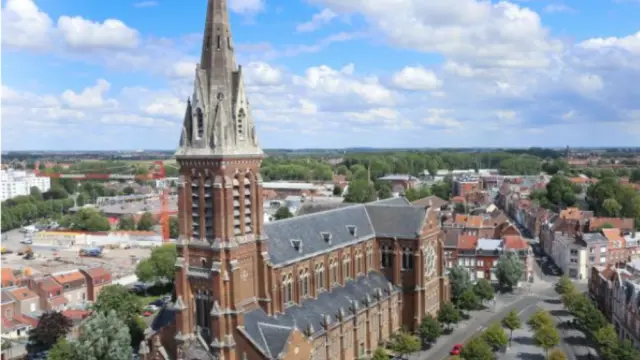
The Belfry of Armentières 67 metres of history and bell music

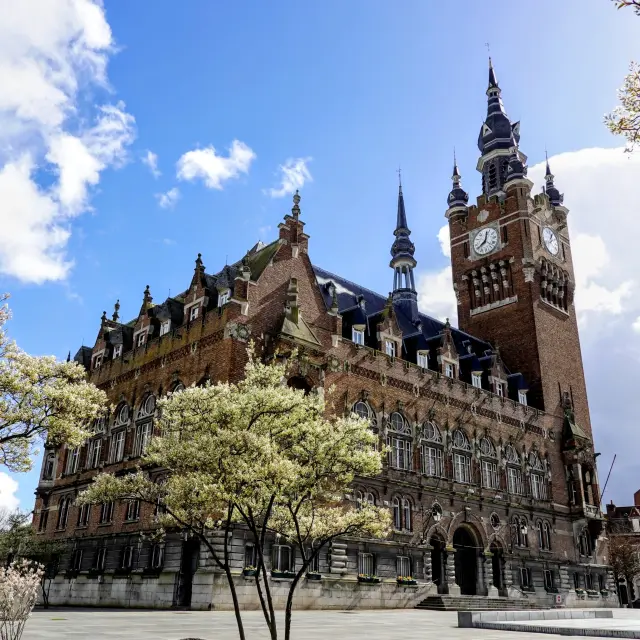
Towering over the Grand’Place with rare elegance, the Belfry of Armentières is far more than bricks and stone — it is the symbol of a city that rose from the ashes. Listed as a UNESCO World Heritage Site, it stands as the ultimate witness to the textile epic and Flemish resilience.

A phoenix of red brick

Unlike its medieval counterparts, the current belfry is a masterpiece of post-war reconstruction. Completely destroyed during the Great War, it was rebuilt in the 1920s by architect Louis-Marie Cordonnier in a striking blend of neo-Flemish and Art Deco styles. Look closely at the interior tiles — you will spot fleur-de-lys motifs paying tribute to the city’s river, as well as a phoenix: the perfect symbol for a city reborn from its ruins.

Climbing to the Top

For the brave, climbing the steps rewards you with one of the finest views in the region. On a clear day, you can make out the Flemish Hills (Mont Cassel, Mont Noir), the slag heaps of the mining basin, and the towers of Lille stretching out on the horizon. Close your eyes for a moment and picture a watchman scanning the skyline for fires or approaching enemy troops.

The Voice of the City: The Carillon

The heart of the belfry beats to the rhythm of its 11 bells — a true open-air musical instrument. Do not be surprised if you catch the melody of La Madelon, the beloved soldier’s song of World War I, ringing out above your head.

Did you know? The belfry is inseparable from the adjoining Town Hall. Together, they form a monumental architectural ensemble that once served as both an administrative hub and the stronghold of the city’s communal rights — the very freedoms the people of Armentières fought to protect.
Must-see  highlights in Armentières

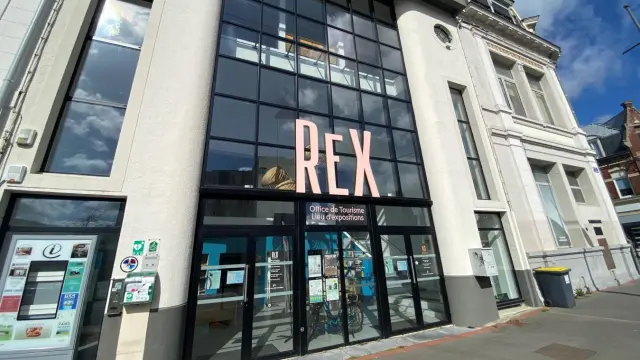
The REX: More Than a Former Cinema

Located near the train station, this cultural venue is one of the city’s beating hearts. This is where the Metropolitan Tourist Office welcomes you, and where local history comes to life through a modern, engaging museum. On the first floor, Le Balcon hosts a rotating programme of temporary art and historical exhibitions throughout the year.

Saint-Vaast Church: The Cathedral of the Lys

Often mistaken for a cathedral due to its impressive scale, this church is an unmissable landmark on the Armentières skyline. Its majestic neo-Gothic architecture — yet another work by the ever-present Louis-Marie Cordonnier — and its stained glass windows, which bathe the nave in extraordinary light, make it a truly special place to visit.

Anecdote: During the French Revolution, the church was requisitioned and converted into a hay barn.

The Cordonnier signature:  Armentières as a total work of art

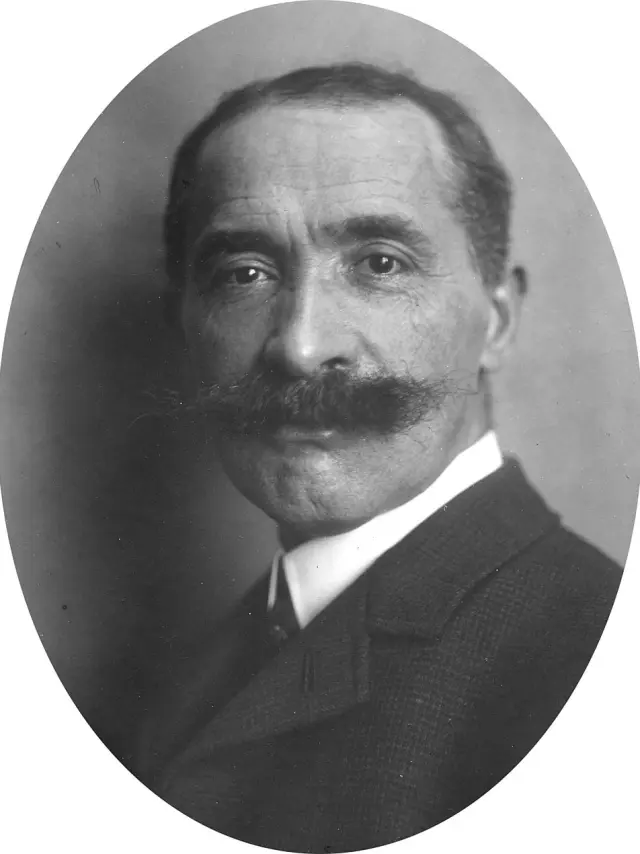
Louis-Marie Cordonnier did not simply build monuments — he literally redesigned the city centre. Armentières is arguably the most complete expression of his urban vision, where every square, every building, and every perspective speaks to the next.

Cordonnier designed an entire monumental trail that still structures the city today. His genius lay in linking buildings through the empty space of the squares in between:

  • The Grand’Place and Place Saint-Vaast duo: He orchestrated the reconstruction of these two great public spaces, creating a dialogue between civic power (the Town Hall) and spiritual power (Saint-Vaast Church).
  • The Belfry and Town Hall: His flagship creation, UNESCO-listed, which restored the city’s historic silhouette.
  • The War Memorial: Solemnly integrated into the public space — and very nearly blown up by German forces during World War II, simply because the sculpted soldier crushed a German eagle underfoot.
  • From the Market Halls to Le Vivat: The Halles, located just behind the Town Hall, were also designed by Cordonnier. Once a bustling marketplace, they have been brilliantly repurposed as Le Vivat, a nationally recognised performance venue — a perfect example of heritage architecture breathing new life through contemporary culture.

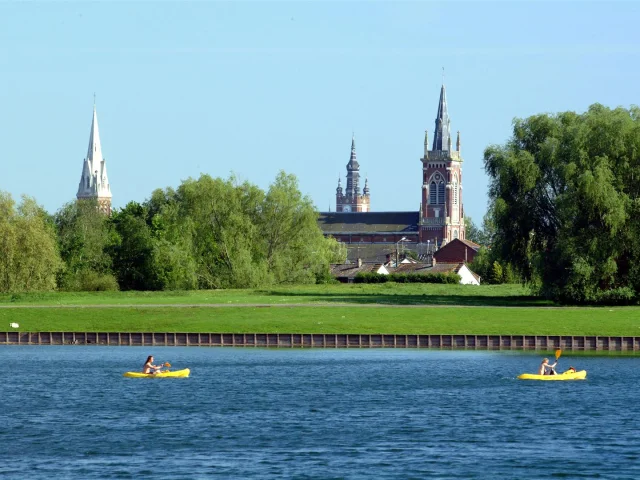
Les Prés du Hem: 120 hectares of adventure and biodiversity

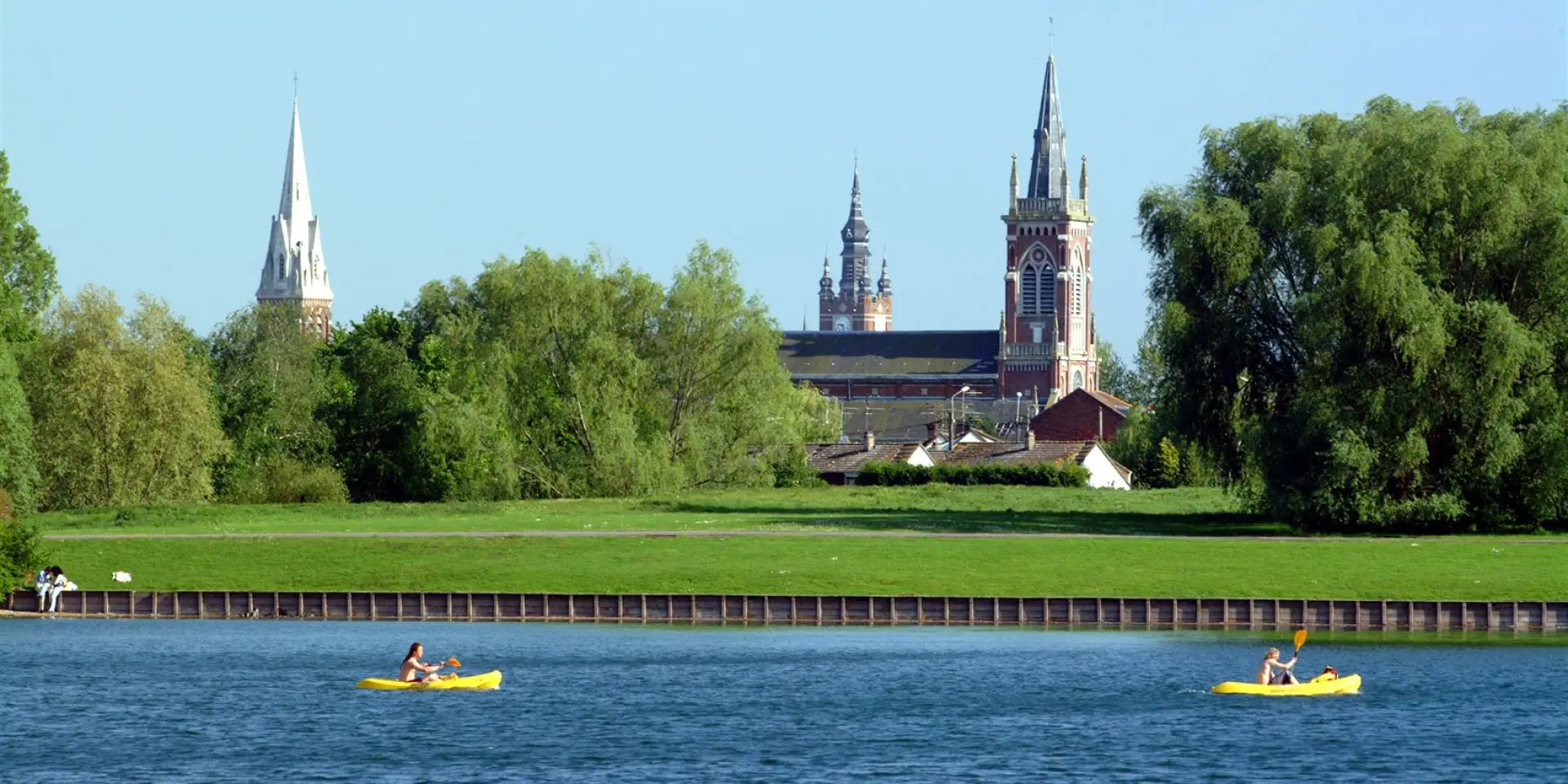
Like an inland sea at the city’s doorstep, Les Prés du Hem is far more than a leisure park. It is a unique ecosystem where water sports, family fun, and nature conservation live in perfect harmony.

A lake born from human hands

The history of Les Prés du Hem is fascinating: this vast expanse of water did not exist 50 years ago. Created in the 1970s as a drinking water reserve for the Lille metropolitan area, the site rapidly transformed into a vast, open-air sanctuary. Today, its 45-hectare lake makes it one of the largest developed natural sites in northern France — total escapism just minutes from the centre of Armentières.

A playground like no other

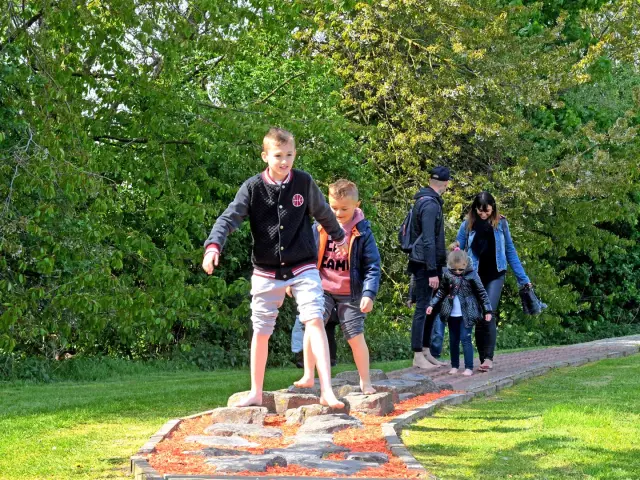
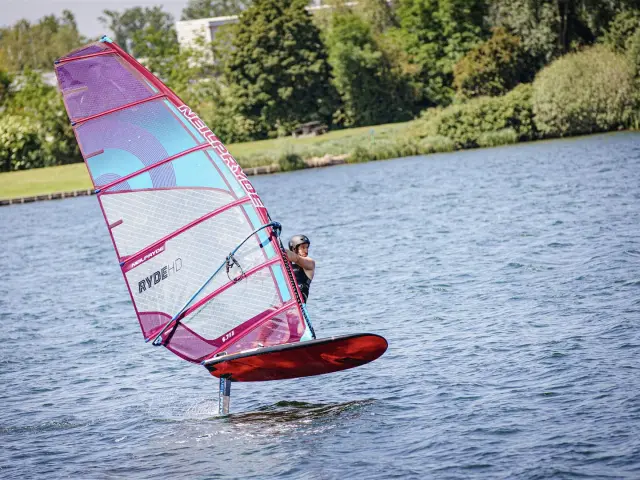
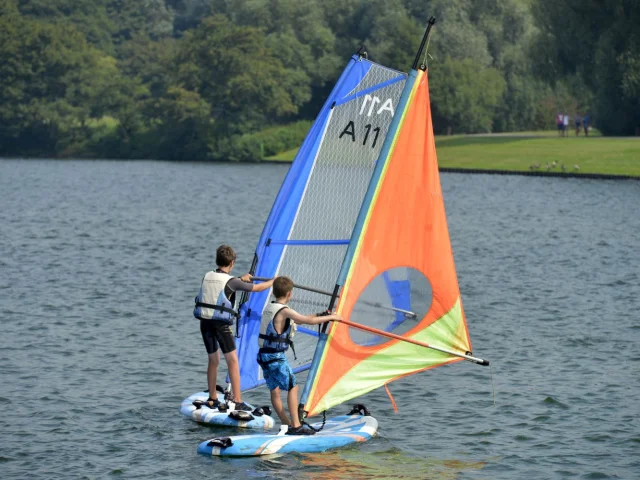
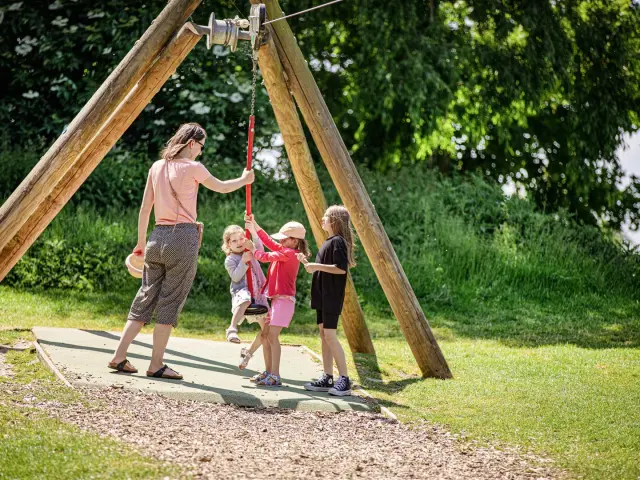
The site is renowned for activities that genuinely help you disconnect. Its sailing school is a regional reference: catamaran, dinghy, or paddleboard — take your pick on a perfectly sized, safely enclosed stretch of water. The famous barefoot trail is the park’s signature experience: nearly one kilometre of sand, wood, stone, and clay underfoot, reawakening forgotten sensations. And for those who prefer to take it easy, the little train loops around the lake shores, letting you take in the full extent of the domain without lifting a foot.

A Sanctuary for Wildlife

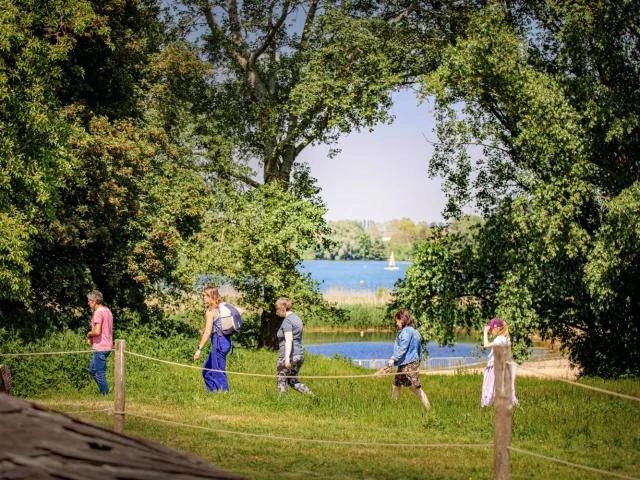
The marshland areas and reedbeds are home to dozens of migratory bird species, observable from dedicated hides without disturbing them. The Vanupied marsh, integrated into the site, is a protected natural zone where local flora grows freely — a striking contrast to the lively leisure areas nearby.

Our tip: The park lives by the rhythm of the seasons. Summer is ideal for supervised swimming and sailing, while autumn and spring are the finest moments for birdwatching and peaceful marsh-side walks.

Access: Located at the entrance to the city (rue des Résistants), with ample parking and walkable from the town centre for the energetic.

The river Lys: The silver thread of the city of linen

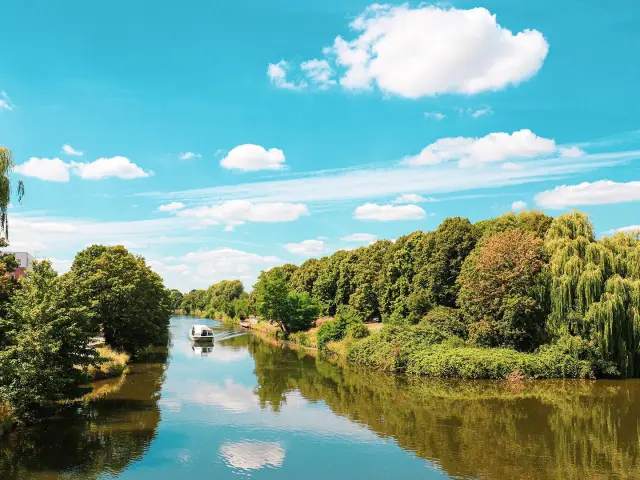
Long nicknamed the “River of Gold”, the Lys is far more than a waterway for Armentières — it is its vital artery, its reason for being, and today its most beautiful space for unwinding

A river that built a fortune

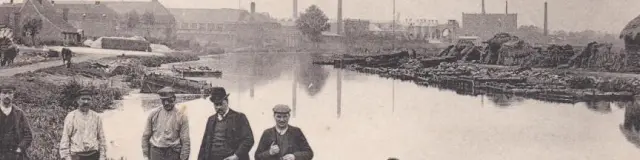
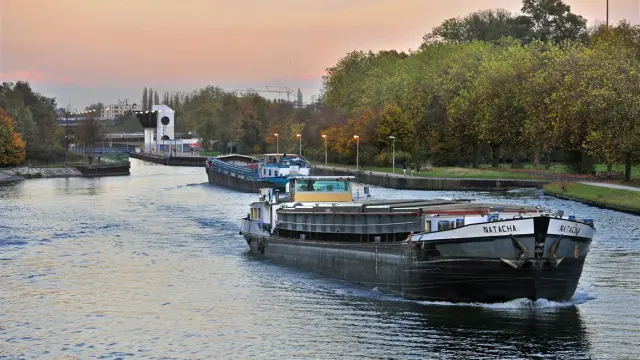
If Armentières became the Cité de la Toile (City of Linen), it owes everything to the Lys. Its soft, low-calcium water, rich in micro-organisms, was uniquely suited to retting flax — the process of separating the fibre from the stem that formed the backbone of a global textile industry. Until the mid-20th century, barges laden with coal, linen, and finished goods crisscrossed its waters, connecting Armentières to the great ports of the North Sea.

A walk between town and open countryside

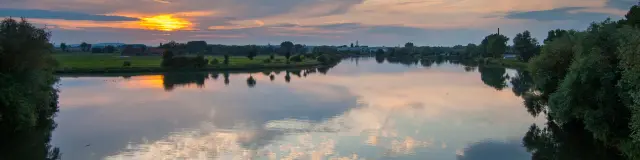
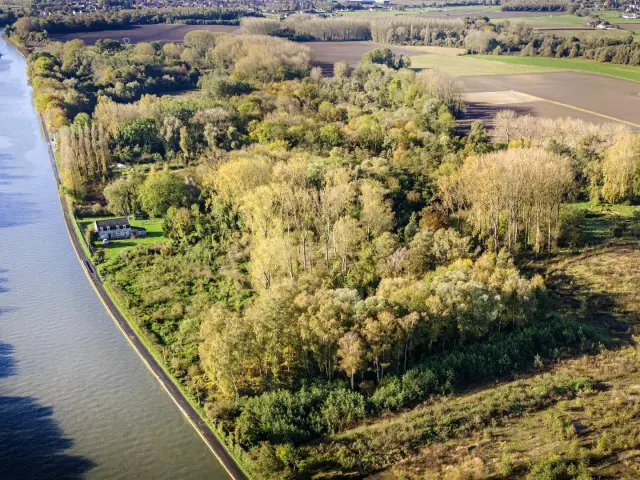
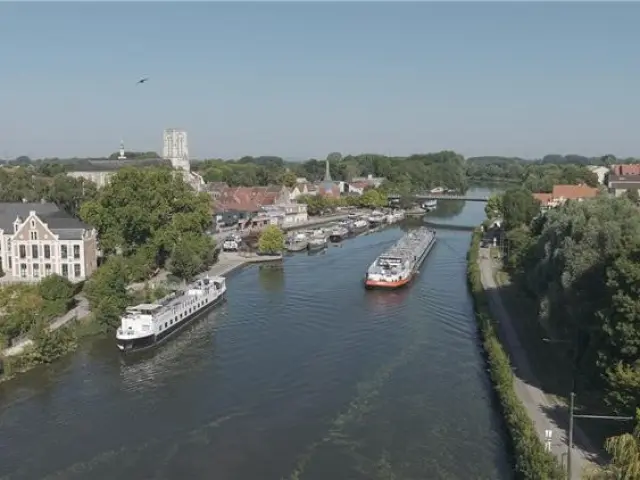
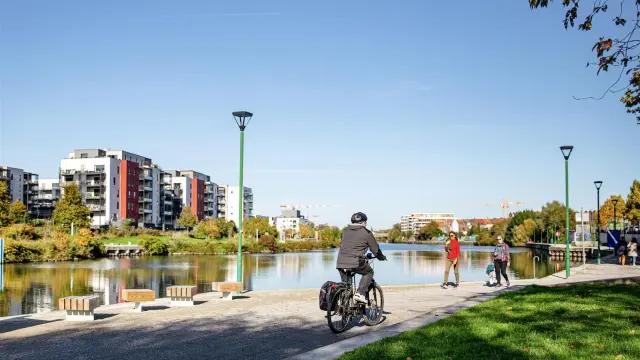
Today, the Lys has reclaimed its calm and clarity. Along the quays, the old spinning mills still stand in red brick, their reflections shimmering in the water — you can almost feel the energy of the Reconstruction era. Further upstream or downstream, the landscape shifts entirely: the towpaths, now fully developed for walkers and cyclists, wind through alluvial plains shared with grey herons, pollard willows, and leisurely pleasure boats. You can follow the river all the way to neighbouring villages like Houplines and Erquinghem-Lys without ever leaving the waterside. Boaters will find a dedicated mooring pontoon in Armentières — the perfect stopover on a waterway journey through the region.

Did you know? The Lys rises in Lisbourg (Pas-de-Calais) and flows all the way to the Scheldt in Ghent, Belgium. In Armentières, you are on a strategic stretch where the river really starts to find its full breadth.

Memory and History : the other faces of Armentières

The Motte-Cordonnier Brewery: A Resurrection

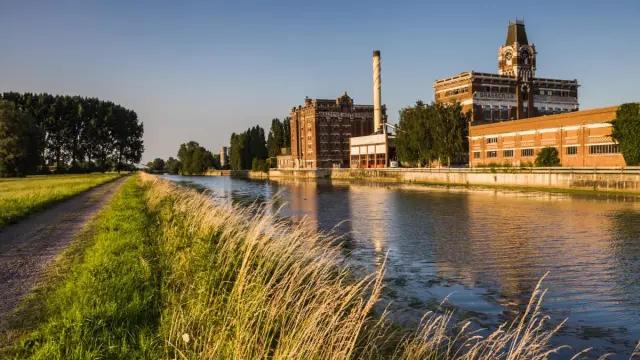
No building better embodies Armentières’s industrial spirit than the Motte-Cordonnier Brewery — a true “cathedral of industry.” Destroyed in 1918, it was rebuilt like a castle, complete with its own majestic belfry tower, a testament to the sheer determination of its people. Today, the site is undergoing a remarkable transformation into an eco-neighbourhood and craft microbrewery. A stroll to admire its neo-Flemish architecture is well worth the detour.

Cité Bonjean Cemetery: A World in Miniature

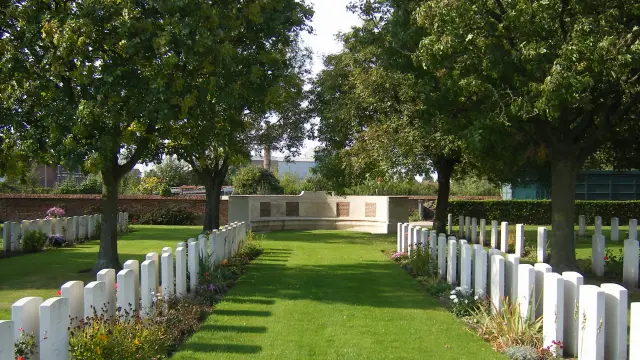
During the Great War, Armentières was effectively a “British city.” The Cité Bonjean Cemetery is one of the most moving places in the entire territory. Here you will find soldiers from across the Empire — Australians, New Zealanders, Canadians — alongside a German section. A place of truly universal remembrance.

The Western Front Way

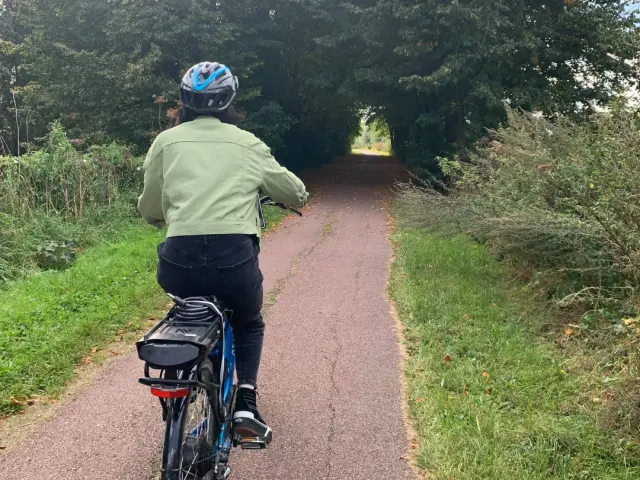
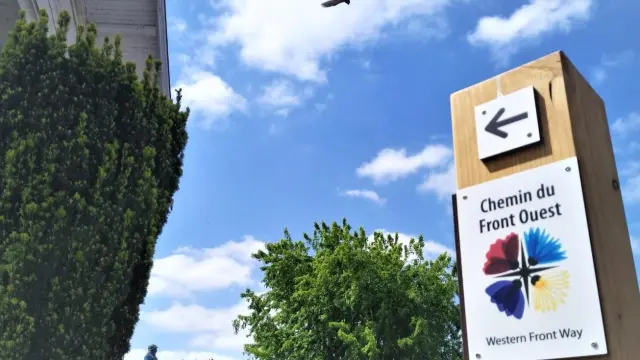
For those who enjoy history in motion, Armentières is the ideal starting point for a 30-kilometre memorial trail following the 1914 front line along the Lys. Signposts and interpretation panels guide you from Armentières through to Fromelles and Ypres, making it a perfect cycling route that weaves together sweeping plains and profound historical depth.

But who really was  "Mademoiselle from Armentières"?

It is the anthem that millions of British and American soldiers sang on every front. But behind the chorus of “Inky Pinky Parlay Voo” lies a historical figure who made Armentières a legend long before the great Line Renaud ever carried the banner of the North.

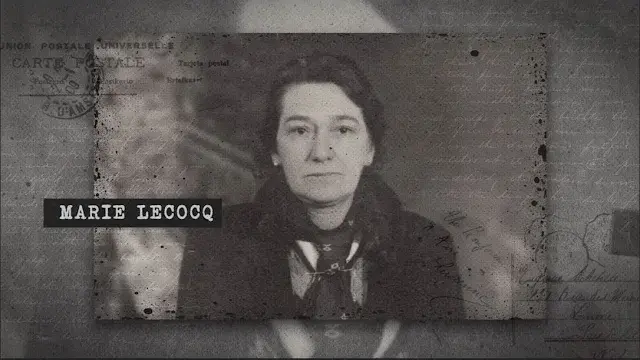
Contrary to popular belief, “Mademoiselle from Armentières” was not a cabaret star — she was the symbol of the warmth and courage of the women of the North during the First World War. The song was popularised by the “Tommies” (British soldiers) billeted in the city, telling the story of a young waitress or brasserie girl who kept her smile and dignity despite the constant bombardment. The name most often cited is Marie Lecocq, a waitress at the Café de la Paix, who became — entirely against her will — the heroine of this inescapable song that travelled from London to New York.

For four years, Armentières lived at British pace. Soldiers came here to rest from the trenches, creating a unique atmosphere of camaraderie and fleeting joy just steps from the front line. In singing this song, they were not just celebrating a woman — they were celebrating a city that gave them a moment of respite, a cold beer, and a little humanity.

Do not miss the statue of Mademoiselle from Armentières, erected at the entrance to the civil cemetery — an essential photo stop.

Did you know? Line Renaud, the modern-day ambassador of the city, has often paid tribute to this historic “Mademoiselle.” Two eras, two voices, one proud Armentières spirit.

Who is Marie Lecocq?
The real Mademoiselle from Armentières

What to do around Armentières? An escape into the heart of "Flemish Softness"

The journey does not end at the city gates. All around Armentières, the “Douceur Flamande” territory reveals its hidden gems: villages of character nestled in the Weppes hills, and the peaceful banks of the Deûle. An invitation to explore rural heritage, living memory, and the art of gentle living.

The Pays de Weppes: Between Memory and Authenticity

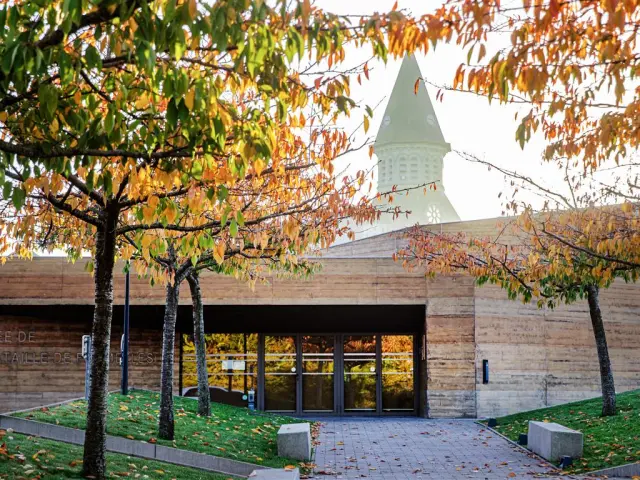
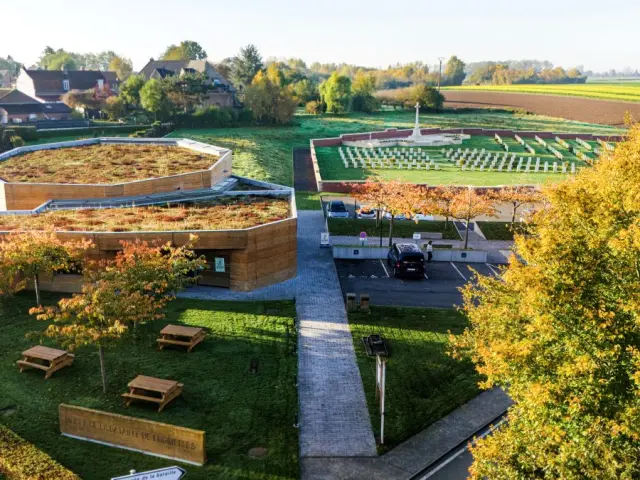
Just south of Armentières, the Weppes countryside forms a verdant haven where history has left indelible marks. Fromelles and its Battle Museum — just a few minutes away — is a site of international renown dedicated to the memory of Australian and British soldiers fallen in 1916: a place of deep serenity and reflection. Stroll through the villages of Aubers, Illies, or Le Maisnil, where rebuilt churches and imposing square farmhouses tell the story of an agricultural territory that refused to give up. And for a well-deserved break, the estaminets (traditional Northern taverns) of Radinghem-en-Weppes, Le Maisnil, and Beaucamps-Ligny are perfect stops for local produce in a wonderfully homely atmosphere.

The Val de Deûle: Life Along the Water

To the east, the landscape opens up to reveal the fluvial charm of the Deûle. Wambrechies, with its pleasure port, château, and celebrated distillery, is a must. Quesnoy-sur-Deûle invites you to wander along beautifully landscaped riverbanks. And in Marquette-lez-Lille, the Grands Moulins de Paris — a masterpiece of industrial architecture — watches over the river in quiet grandeur.

Nature and slow travel: breathing in the open fields

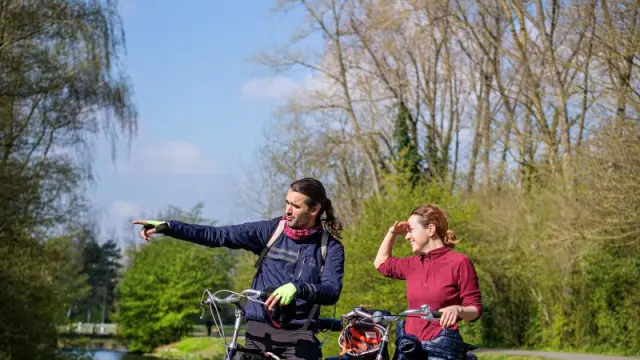
The territory is a paradise for outdoor lovers. Marked hiking loops between Frelinghien and Hantay let you discover local flora and fauna among pollard willows and alluvial plains. Head north to the frontier towns of Comines and Halluin, where surprises abound — like the neo-Byzantine church of Saint-Chrysole in Comines. And Pérenchies deserves a stop for its local traditions and links to the area’s industrial and folk heritage.

Hidden Gems of the Territory

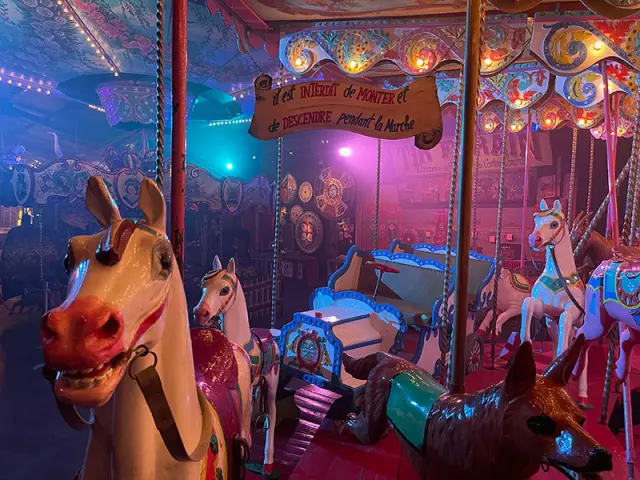
  • The Musée des Arts Forains in Saint-André-lez-Lille — Step out of time and into a world of magic and nostalgia. This private museum brims with restored treasures: vintage fairground rides, mechanical organs, carnival games, and period objects. A living, breathing place that brings the atmosphere of old-fashioned fairs back to vivid life — perfect for children and adults alike, in a magnificently repurposed industrial setting.
  • The Fontaine Saint-Chrysole in Radinghem-en-Weppes — Deep in the Weppes countryside, this site weaves together nature and Flemish spirituality. Legend has it that Saint Chrysole, fleeing his persecutors, was beheaded — and where his head fell, a spring burst forth. People still come to this fountain, said to cure headaches and skin conditions. A quiet, wild corner of paradise, and a perfect example of the vernacular heritage that the Douceur Flamande works so hard to protect.