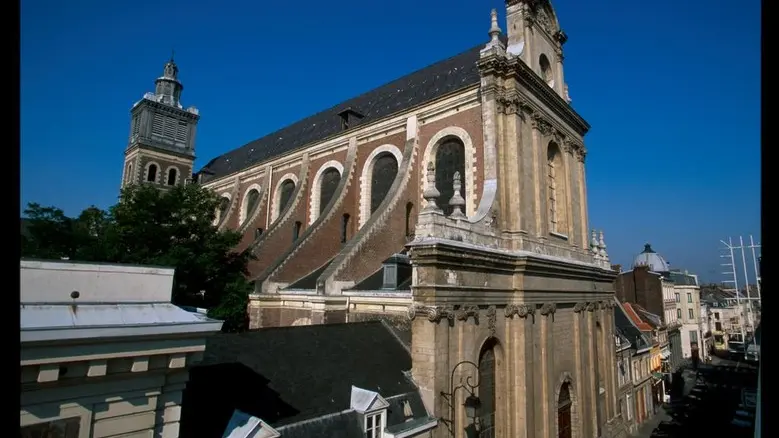
Located a stone's throw from the Grand Place, at 47 rue de l'Hôpital Militaire, the Church of Saint-Etienne is one of the Baroque jewels of Lille's historic center. Built between 1743 and 1748, it was once the chapel of the Jesuit College, before becoming a parish church in 1796, following the destruction of the former Church of Saint-Etienne during the Austrian siege of 1792. It was listed as a Monument Historique in 1987.
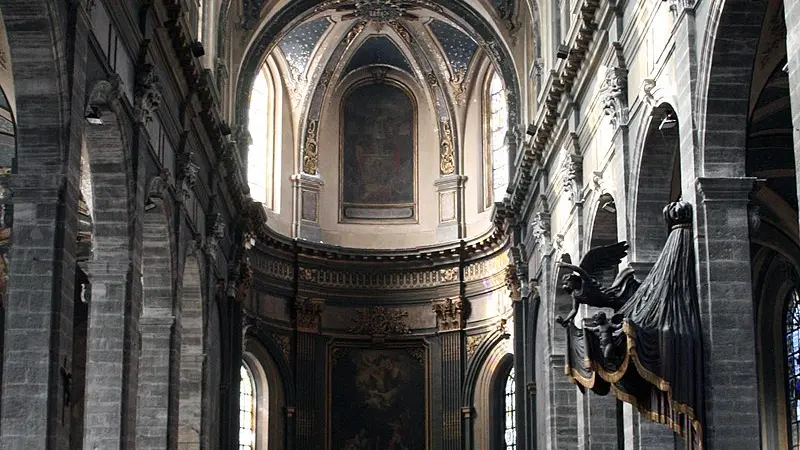
The building is distinguished by its Roman Baroque façade, inspired by the famous Gesù in Rome. 29 meters high, it features two superimposed levels - Ionic and Corinthian - adorned with a pediment bearing the IHS monogram of the Society of Jesus. To the left of the choir rises a 57-metre bell tower, while the interior, bright and harmonious, adopts a Latin cross plan. The nave, over 60 meters long, is supported by Soignies stone pillars decorated with Corinthian columns. The rich decoration continues in the side chapels, choir and panelling, created by sculptors Huidiez-Tierce and Buisine.
The church is also home to a remarkable artistic heritage: the pulpit sculpted by François Rude, several 17th-century Flemish paintings, and a large 19th-century organ by Daublaine-Callinet. It's an ideal place to discover the religious art of Lille, a blend of Baroque, Jesuit history and Flemish heritage.